A wall-mounted TV with cables hanging under it looks unfinished. There are two proper ways to fix that, and one popular shortcut to avoid. The short version: a cord cover works on any wall and comes off without a trace; cables inside the wall disappear completely but need an interior drywall wall.
The two options side by side
| Cord cover on the wall | Cables inside the wall | |
|---|---|---|
| What you see | A slim painted channel under the TV | Nothing |
| Walls it works on | Any: drywall, plaster, brick, stone | Interior drywall with an open cavity |
| What is cut | Nothing | Two small openings in the drywall |
| When you move out | Comes off; a little filler and paint | Two wall plates stay, or two patches |
| Price with us | $59, cover included | $89, using your cables |
Option 1: a cord cover on the wall
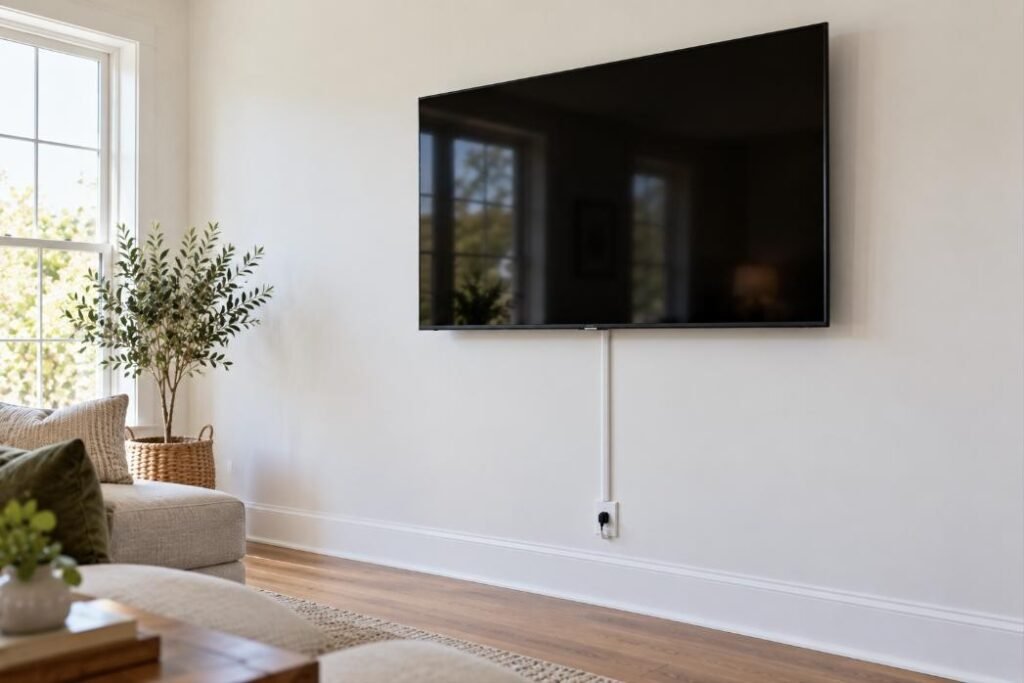
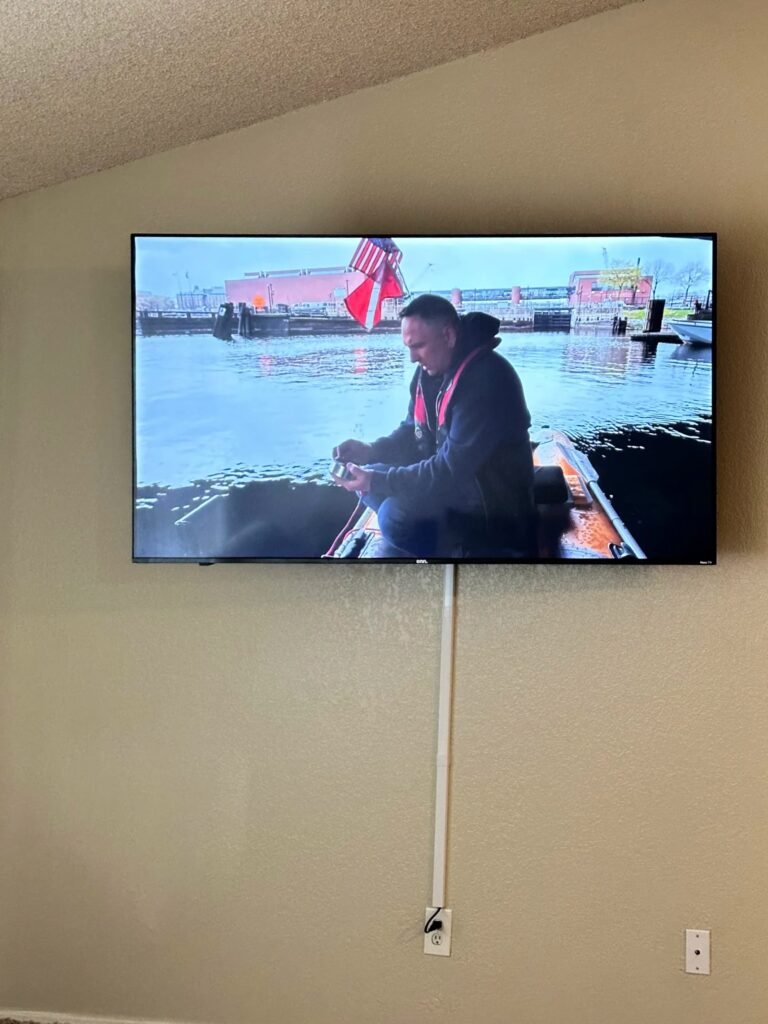
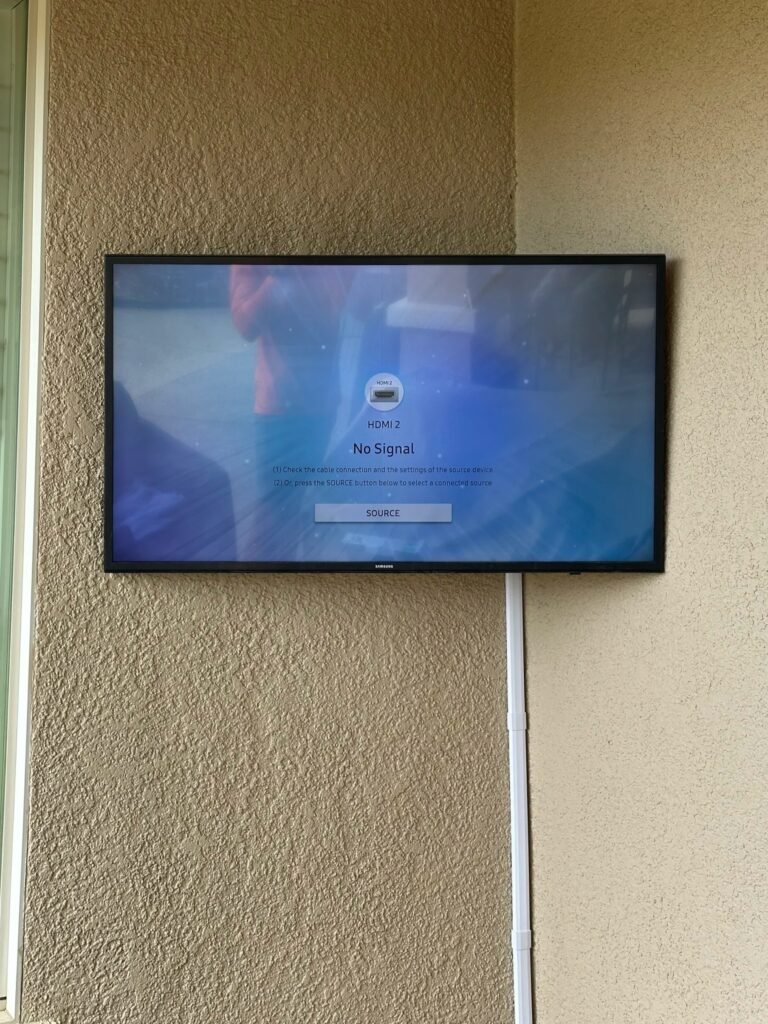
A slim plastic channel sticks or screws to the wall between the TV and the outlet. The cables go inside, the lid snaps on, and you can paint it the color of the wall.
- Works on any wall, including brick, plaster and rentals.
- Nothing is cut open.
- Still visible if you look for it, but tidy.
With us it is $59, cover included.
Three things make a cover look intentional. Run it straight down from the center of the TV, not at an angle toward the outlet. Paint it with the same paint as the wall, not a close match. And pick a channel wide enough for every cable you have today plus one more, so the lid closes flat.
Option 2: cables inside the wall
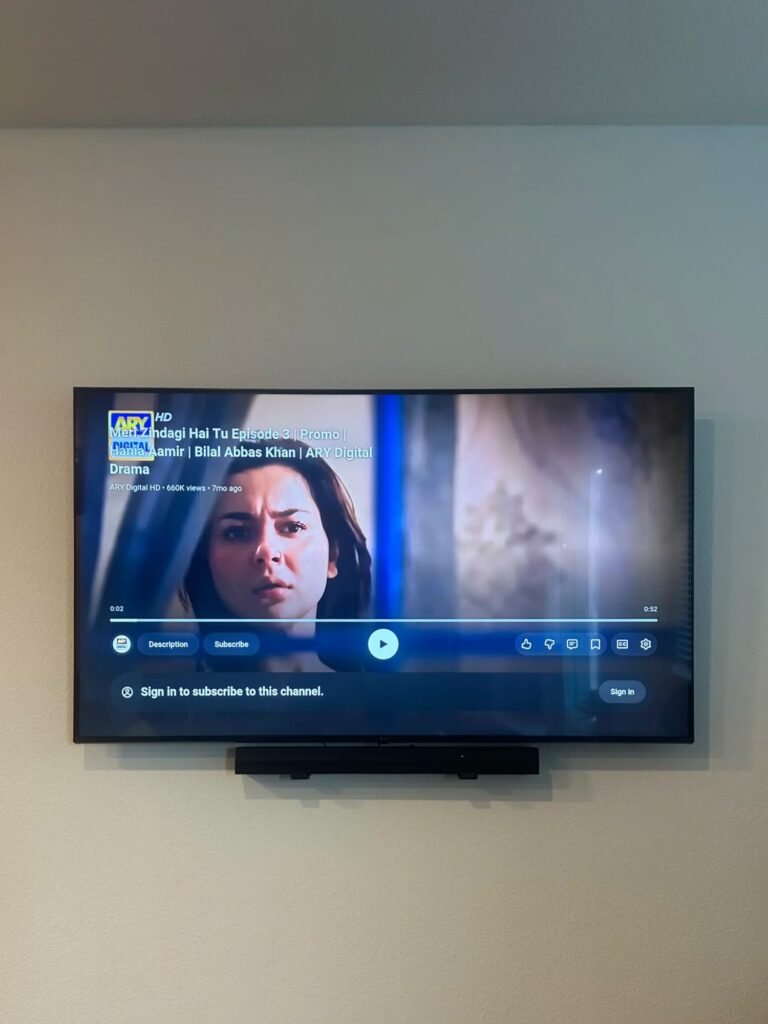
Two small openings are cut in the drywall — one behind the TV, one near the floor — and the cables run through the empty space between the studs. From the room you see a TV and nothing else.
- Works on interior drywall walls with an open cavity.
- Harder or impossible on brick, concrete, exterior walls full of insulation, or where a horizontal fire block crosses the cavity.
With us it is $89 on interior drywall, using your cables.
The openings are finished with wall plates, so the cables can be pulled out and replaced later. That matters more than it sounds: HDMI standards change, and a cable that is sealed into a wall is a cable you are stuck with.
The shortcut to avoid
Low-voltage cables such as HDMI may run inside a wall if they are rated for it (look for CL2 or CL3 printed on the jacket). The TV’s power cord may not. Electrical code does not allow ordinary flexible power cords or extension cords to be concealed inside walls, because they are not built for it and a fault there is hidden.
The correct ways to get power behind the TV are an in-wall power kit made for this purpose or a new outlet installed behind the TV by a licensed electrician.
Plan the cables before the visit
- Count them. One HDMI per device that stays connected: cable box, console, streaming box. A soundbar usually needs one more HDMI or an optical cable.
- Measure the path. From the TV’s ports down the wall to where the devices sit, then add about three feet of slack. A cable that is just long enough will not reach once it has to turn corners.
- Check the rating. For the in-wall option, HDMI cables need CL2 or CL3 on the jacket.
- Think one device ahead. Adding a cable later means opening the cover or fishing the wall again.
A streaming stick plugged straight into the TV needs no cable in the wall at all. Wi-Fi removes the network cable, not the power cable: the TV still has to be plugged in.
Which one should you pick?
- Renting, or a brick or plaster wall: cord cover.
- Your own home with a drywall wall: inside the wall.
- Fireplace wall: send a photo first — it depends on what is behind the facing.
More on both options: hiding the wires.
Common questions
Can wires be hidden above a fireplace?
Sometimes. A drywall chimney breast often has a cavity to work with. Brick and stone usually do not, and the cover goes down beside the firebox. A photo tells us which one you have. See mounting a TV above a fireplace.
Can cables go inside an exterior wall?
It is harder. Exterior walls are packed with insulation and often have blocking across the cavity. We check on site and tell you before anything is cut.
Is the in-wall option allowed in a rental?
It cuts the drywall, so it needs the landlord’s permission. A cord cover does not, which is why it is the usual choice for renters.
Do you bring the cables?
The cord cover is included in its price. For the in-wall option we use your cables, so have in-wall rated HDMI of the right length ready. Not sure what to buy? Tell us the devices and we will say what is needed.
Get a price for your TV — name and number first, then a few quick questions. It takes about a minute.