The most common regret after buying a TV is not “it is too big.” It is “I should have gone one size up.” A quick measurement settles it.
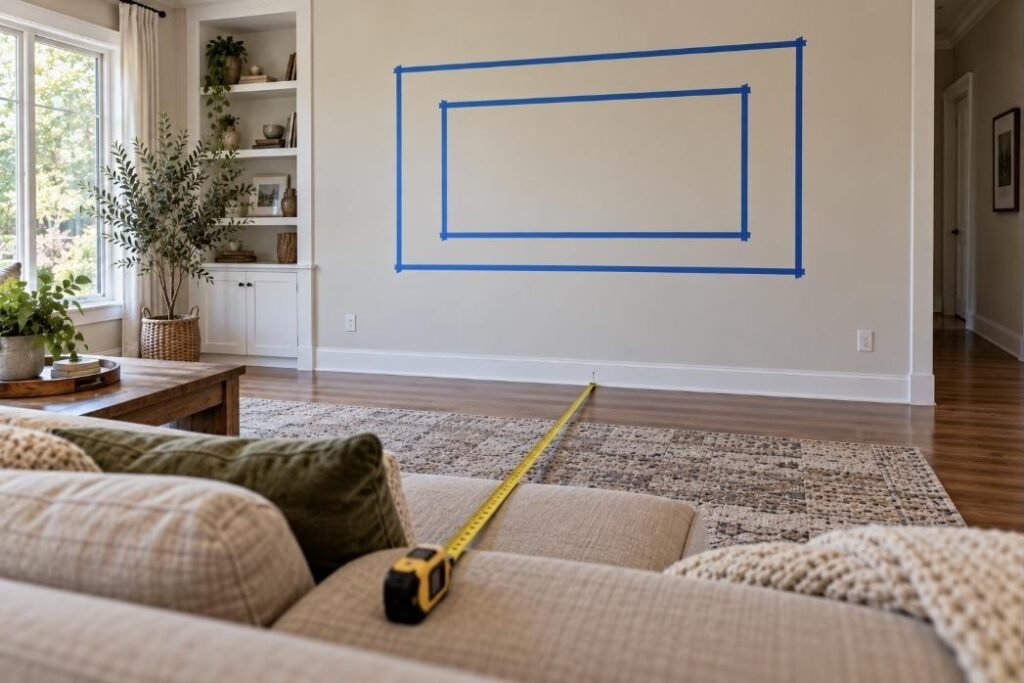
Measure the distance first
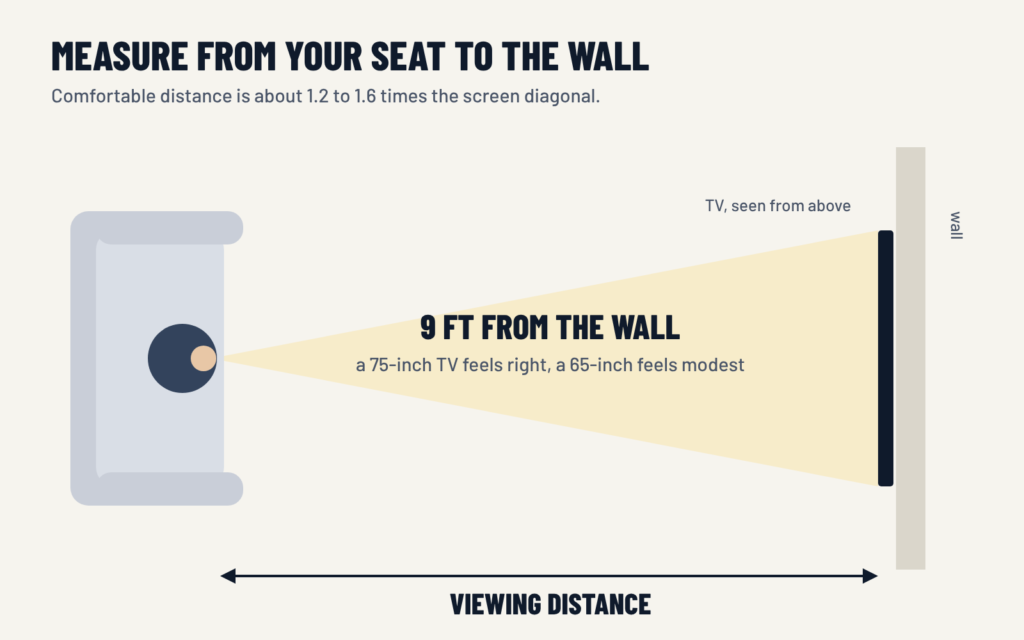
Measure from where your eyes are when you sit to the wall where the TV will hang. Then use this rule of thumb for today’s 4K TVs: a comfortable viewing distance is roughly 1.2 to 1.6 times the screen diagonal.
TV size, real dimensions and viewing distance
Screen sizes are measured corner to corner, so the number on the box is neither the width nor the height. The table gives both, plus the distance at which each size is comfortable.
| TV size | Width | Height | Comfortable distance |
|---|---|---|---|
| 43″ | about 37 in | about 21 in | 4.5 to 5.5 ft |
| 50″ | about 44 in | about 25 in | 5 to 6.5 ft |
| 55″ | about 48 in | about 27 in | 5.5 to 7.5 ft |
| 65″ | about 57 in | about 32 in | 6.5 to 8.5 ft |
| 75″ | about 66 in | about 37 in | 7.5 to 10 ft |
| 85″ | about 75 in | about 42 in | 8.5 to 11.5 ft |
| 98″ | about 86 in | about 48 in | 10 to 13 ft |
If your sofa is 9 feet from the wall, a 65-inch TV will feel modest and a 75-inch will feel right. Widths and heights are for the screen itself; the frame adds a fraction of an inch on each side.
Check that it fits the wall
Leave a few inches on each side, especially above a fireplace or between two windows. Tape the outline on the wall before you buy. Stand back, then sit down: a rectangle of tape tells you more in a minute than a spec sheet does.
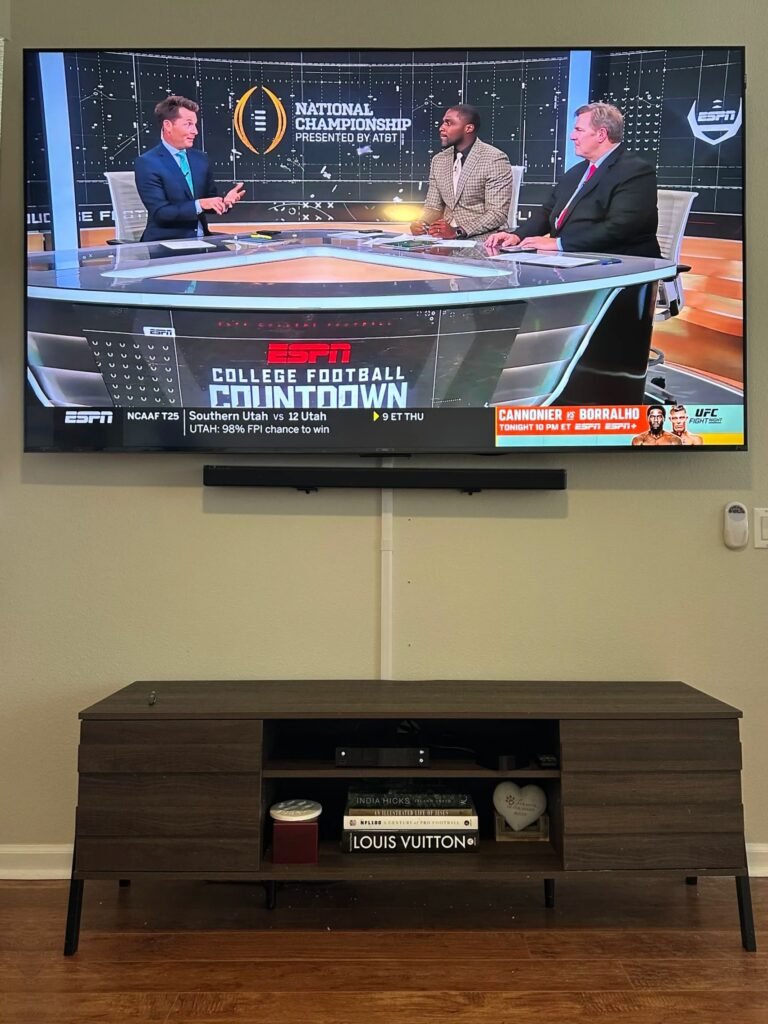
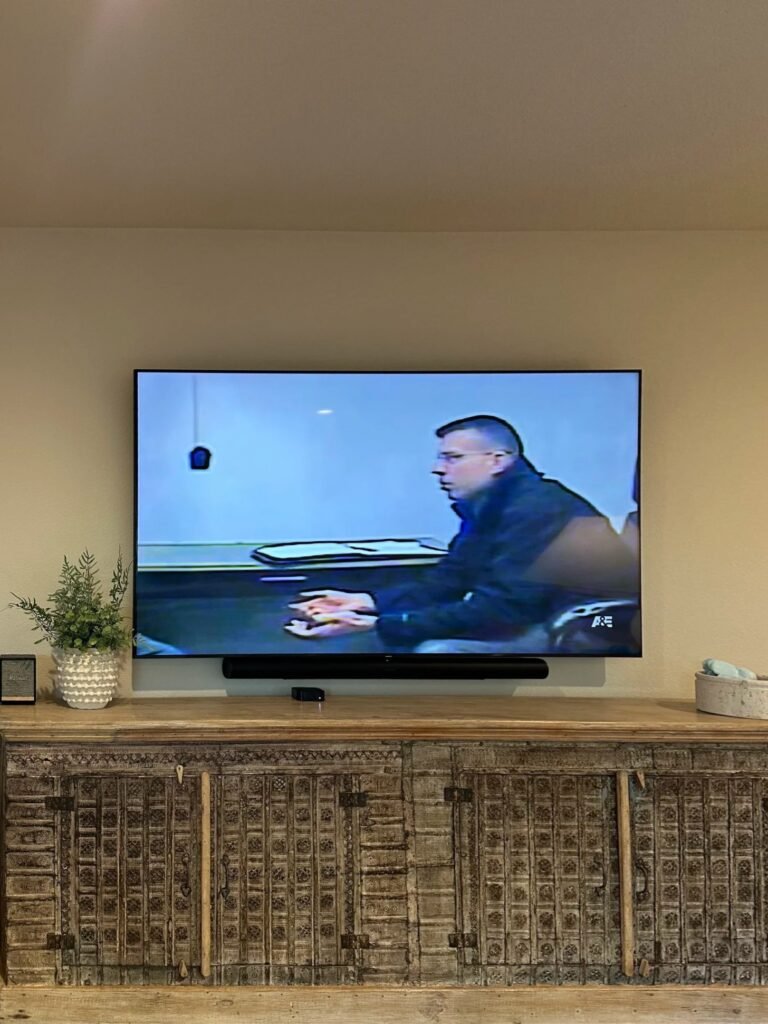
If the TV goes above a console, the console should be at least as wide as the TV. A wide screen over a narrow cabinet looks top-heavy, and it leaves nowhere to hide the cables.
Rooms where the rule bends
- Bedrooms. Measure from the pillow, not from the foot of the bed. The distance is often longer than in the living room, but a smaller screen is usually fine there.
- Wide rooms. If some seats are far off to the side, a bigger screen does not help them. A full-motion mount that turns the TV does. See which TV mount you need.
- Small rooms. Sitting closer than the table suggests is not harmful with a 4K picture. It just means your eyes travel more across the screen, which some people enjoy and some find tiring.
- Above a fireplace. The width of the chimney breast is the limit. Measure it before choosing the size.
Bigger TVs change the installation
- Weight. Large TVs are lighter than they used to be, but an 85-inch still needs two people to lift safely.
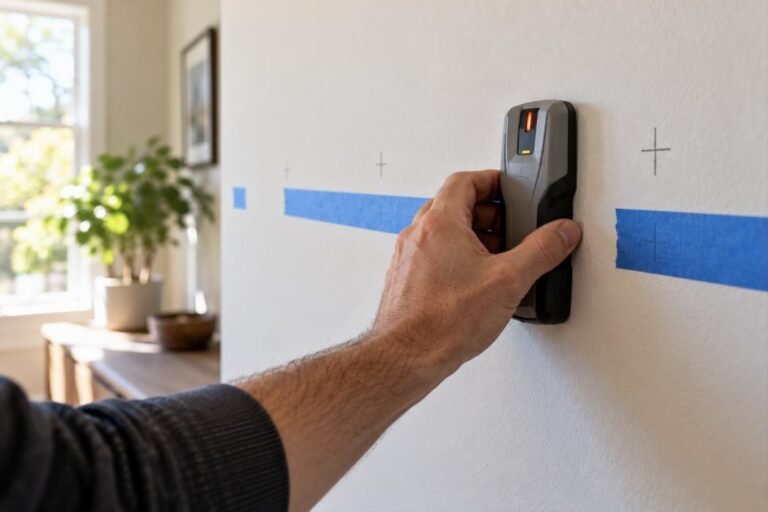
- Studs. A wider TV lets the bracket span more studs, which is good. The mount must be rated for the size and weight.
- Height. A big screen mounted too high is harder on the neck than a small one. See how high to mount a TV.
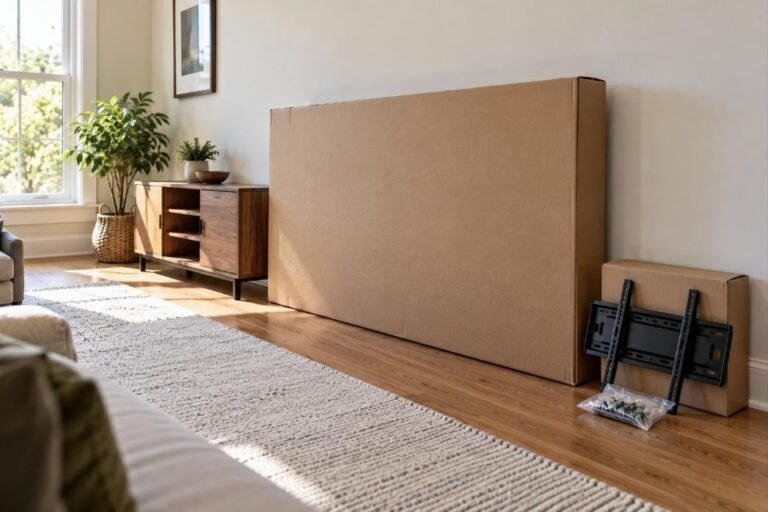
- Getting it home. The box is much larger than the TV. Measure the car, the stairs and the turn in the hallway before you buy an 85-inch.
What it costs to mount
Our prices follow the size: up to 65 inches is $119, 70 to 86 inches is $149, and 87 inches and larger starts at $189. From 70 inches up the TV always needs a second pair of hands: you help lift, or a second technician comes for $49. The full list is on the prices page.
Common questions
Is a 75-inch TV too big for a living room?
Not if you sit about 7.5 to 10 feet from it and the wall has room for 66 inches of width. In a smaller room a 65-inch is the safer choice.
Does a bigger TV need a different mount?
It needs a mount rated for its weight and VESA pattern. The type — fixed, tilting or full-motion — depends on the height and the seating, not on the size.
Can one person mount a 65-inch TV?
One technician can do the whole job, but the lift onto the bracket is safer with a second pair of hands from 60 inches up. With us that is you helping for a minute, or a second technician.
Should I size the TV for 4K or for the room?
For the room. Almost every TV sold today is 4K, and at normal living-room distances the distance rule above already assumes it.
Get a price for your TV — name and number first, then a few quick questions. It takes about a minute.