Two TVs of the same size can take twenty minutes or two hours to hang. The difference is the wall. Here is how to tell what you have, what each type needs, and what it means for the cables.
Five walls at a glance
| Wall | How to tell | What holds the TV | Cables |
|---|---|---|---|
| Drywall on wood studs | Hollow knock, a dull thud every 16 inches | Lag bolts into two or more studs | Inside the wall or in a cover |
| Plaster and lath | Hard, slightly uneven, home built before the 1950s | Bolts into the studs, drilled slowly | Usually a cover |
| Brick or concrete | Solid everywhere, cold to the touch | Masonry anchors | A cover on the surface |
| Metal studs | A magnet sticks along the whole stud | Toggle anchors made for steel studs | Inside the wall or in a cover |
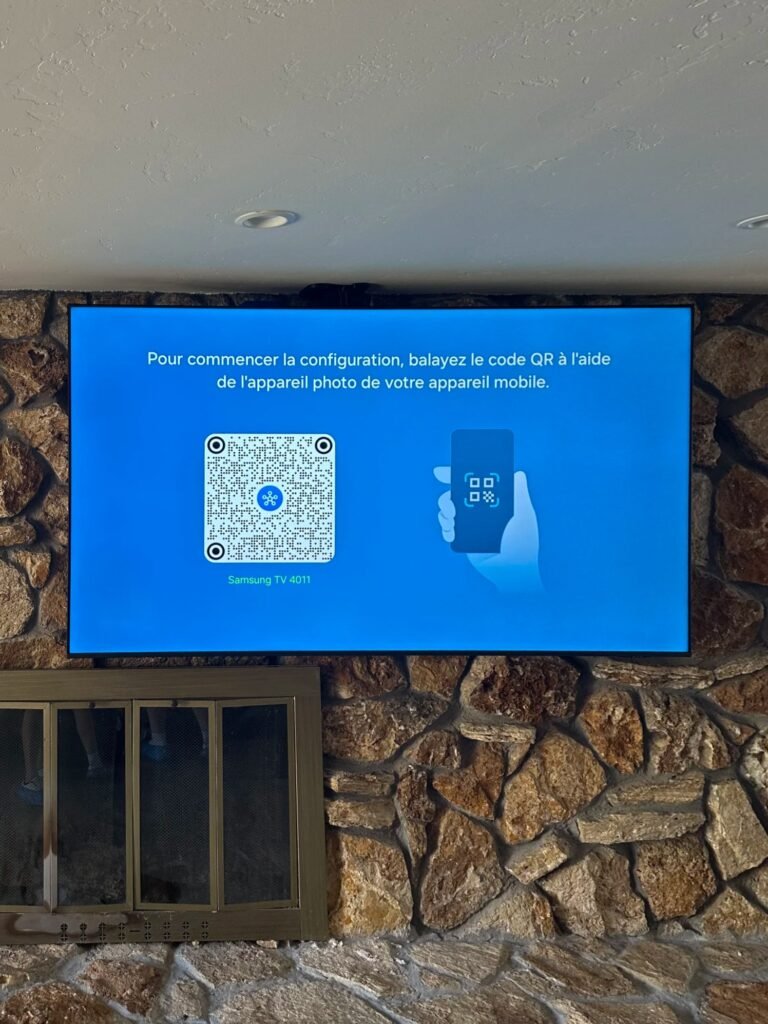
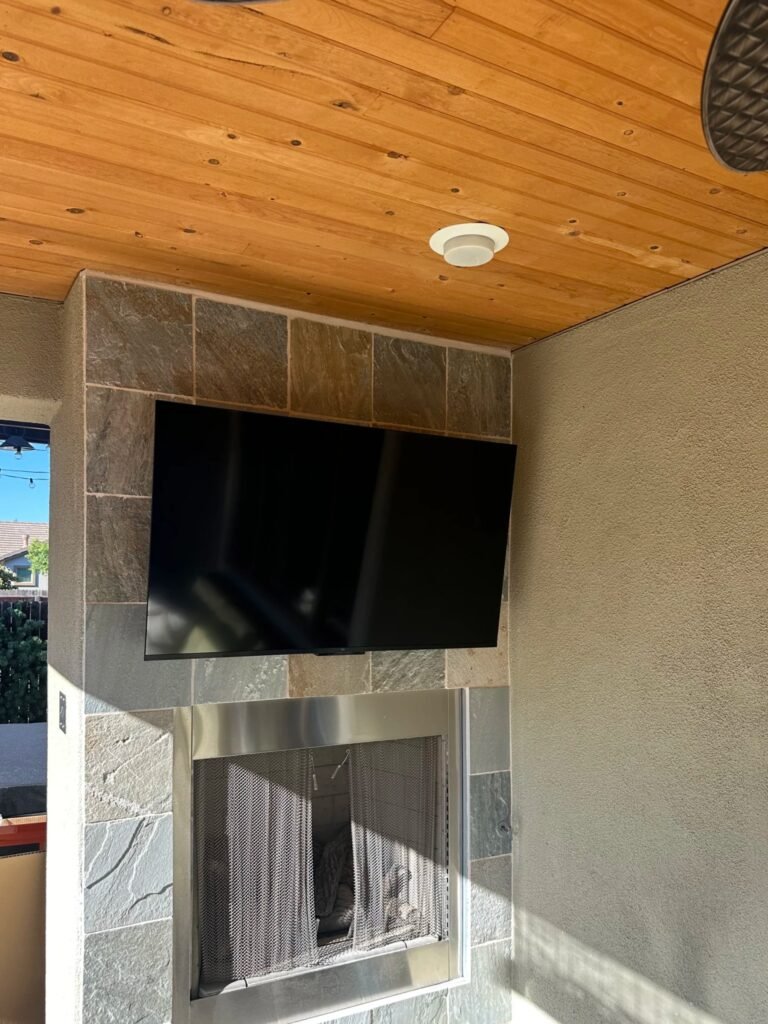
| Stone veneer or tile | A decorative face over another wall | Long anchors into the structure behind | Depends on what is behind; photo first |
Drywall on wood studs
The standard in most American homes built since the 1950s. Behind the half-inch drywall are vertical wood studs, usually 16 inches apart, sometimes 24.
How it is mounted: lag bolts through the bracket into at least two studs. Drywall alone, even with heavy anchors, is not a safe place for a large TV on a moving arm.
How to tell: knock on the wall. Hollow, then a dull thud every 16 inches.
Plaster and lath
Common in homes built before the 1950s. Thin wood strips are nailed to the studs and covered with thick plaster. It is hard, a little uneven and it confuses simple stud finders.
How it is mounted: still into the studs, but found with more care, and drilled slowly so the plaster does not crack.
Brick and concrete
Fireplaces, rowhouse party walls, basements, many condos.
How it is mounted: a hammer drill and masonry anchors. Once in, it is one of the strongest mounts there is. Cables usually stay on the surface in a cover.
Metal studs
Common in apartment and condo buildings. The studs are thin steel channels, not wood.
How it is mounted: with toggle anchors designed for metal studs, spread across several studs. Ordinary lag bolts do not hold in thin steel.
How to tell: a magnet sticks along the whole height of the stud, not just at the screws.
Stone veneer and tile
A decorative layer over something else. The anchors must pass through the facing into the structure behind. Tile is drilled slowly with a bit made for it, so the glaze does not chip; natural stone is uneven, so the bracket is shimmed until it sits flat.
Finding studs without a stud finder
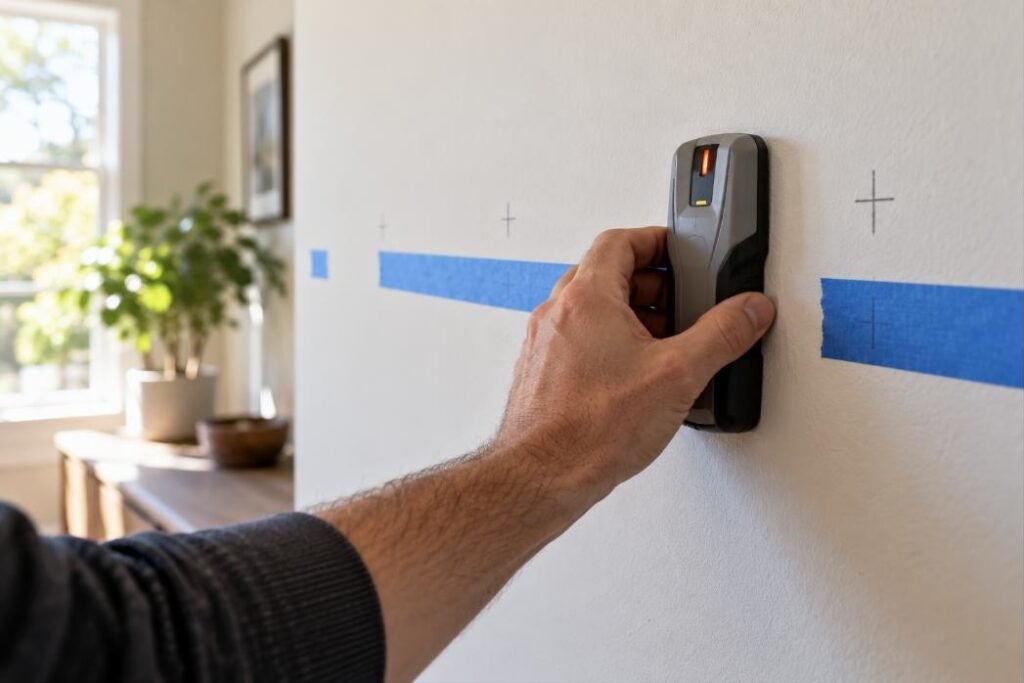
- Start at an outlet or a light switch. The electrical box is fastened to the side of a stud. Knock on both sides to hear which.
- Measure in 16-inch steps from that stud. Most walls keep the spacing; some use 24 inches.
- Slide a small magnet across the wall. It catches on the drywall screws, and those run in a vertical line down each stud.
- Check the baseboard. Nail heads or filled dimples often mark the studs.
Finding the stud is half of it. The bolt should go into the middle of the stud, not its edge, which is why installers confirm the position with a thin test hole that ends up hidden behind the bracket.
What is inside the wall besides studs
Electrical cable usually runs straight up or down from outlets and switches, and sideways between them at about outlet height. Plumbing follows kitchens and bathrooms on the other side of the wall. Two habits keep a drill away from both: do not drill directly above or below an outlet or switch, and scan the wall before drilling if a bathroom or kitchen backs onto it.
What it does to the price
Standard drywall is the base price. Brick, concrete or a drywall fireplace adds $49; tile or stone is from $69, and when both apply you pay only the larger one. The full list is on the prices page.
Why we ask before the visit
The installer brings different anchors and drill bits for each wall. If you are not sure what you have, a photo of the wall and the age of the building are usually enough. The wall type is one of the questions in our quote form, and the price is confirmed before the visit.
Common questions
Can drywall anchors hold a TV?
Heavy toggle anchors hold more than people expect, but drywall itself is the weak part: it crumbles under a load that moves. For a TV, and always for a TV on an arm, the mount goes into studs or masonry.
What if there is no stud where I want the TV?
A mount with a wide wall plate lets the TV slide left or right after the plate is bolted to the studs. That usually covers the difference. If it does not, the installer will show you the options on the wall before drilling.
How do I know if I have metal studs?
Run a magnet up and down where a stud should be. On wood it catches only at the screws. On steel it holds along the whole height. Apartment and condo buildings are the usual place to find them.
Is it better to drill into the brick or the mortar?
Into the brick where possible. Mortar is softer and can crumble around an anchor, especially in older walls.
Get a price for your TV — name and number first, then a few quick questions. It takes about a minute.